7 Common Feng Shui Mistakes That May Be Blocking Good Energy in Your Home

Scroll through social media and you’ll find thousands of Feng Shui tips promising better luck, more money, healthier relationships, and greater success.
Place a mirror here.
Add a fountain there.
Put a crystal in the corner.
Buy a money plant.
The problem?
Most Feng Shui advice online isn’t necessarily wrong — it’s incomplete.
After more than a decade of studying residential Feng Shui layouts, Flying Star Feng Shui, environmental energy patterns, and home energy analysis, I’ve noticed the same issue repeatedly: people focus on remedies before understanding the actual cause of the imbalance.
The result is often frustration.
Many homeowners spend hundreds of dollars on Feng Shui products while overlooking the factors that have the greatest influence on how energy moves through their space.
Before you buy another crystal or rearrange your furniture, make sure you’re not making one of these common mistakes.
Quick Answer: What Are the Most Common Feng Shui Mistakes?
If you’re looking for the biggest Feng Shui mistakes homeowners make, they are:
- Placing mirrors directly opposite the front door
- Adding Feng Shui cures before clearing clutter
- Misusing the Bagua Map
- Overusing water features for wealth activation
- Positioning the bed directly in line with the door
- Mixing too many elemental remedies
- Ignoring the external environment around the home
In most cases, poor Feng Shui is not caused by missing objects.
It’s caused by blocked energy flow, poor layouts, environmental pressure, and imbalance within the living space.
Mistake #1: Placing Mirrors Directly Opposite the Front Door
One of the most repeated Feng Shui tips online is to place a mirror near the entrance to “expand energy.”
While mirrors can be beneficial, placement matters.
In traditional Feng Shui, the front door is considered the primary entry point for energy entering the home. When a mirror directly faces the front door, it may reflect that incoming energy back outside before it has an opportunity to circulate throughout the space.
Better Approach
Instead of placing a mirror directly opposite the entrance:
- Position it on a side wall near the entry
- Use it to reflect natural light
- Allow energy to move deeper into the home before encountering reflective surfaces
Small adjustments in placement often produce better results than adding additional remedies.
Mistake #2: Buying Remedies Before Clearing Clutter
This is arguably the most overlooked Feng Shui mistake.
People frequently purchase:
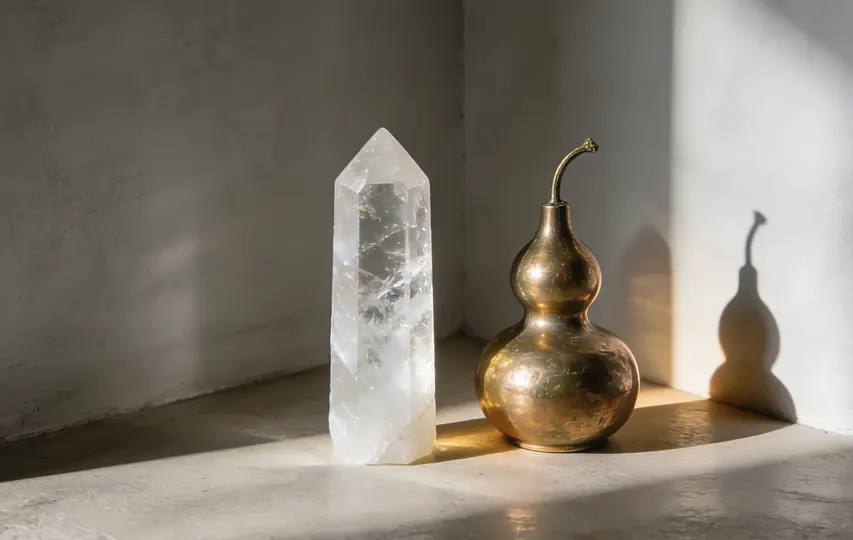
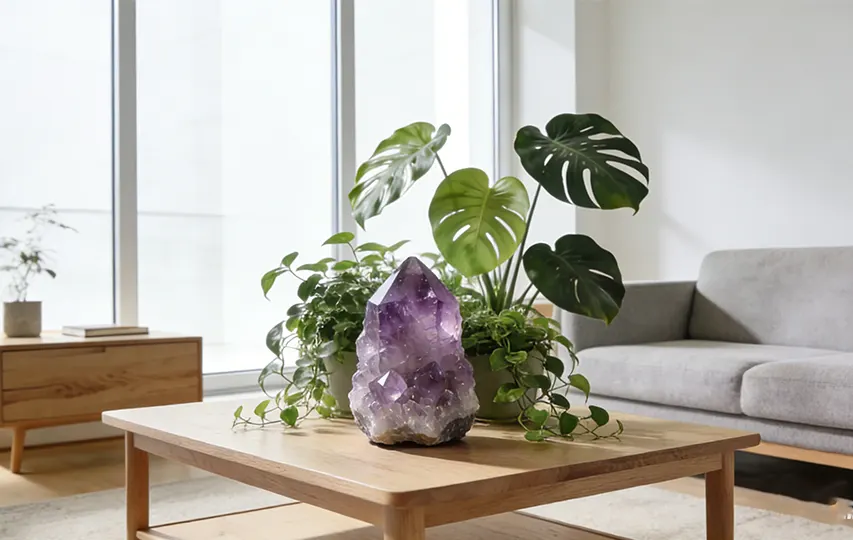
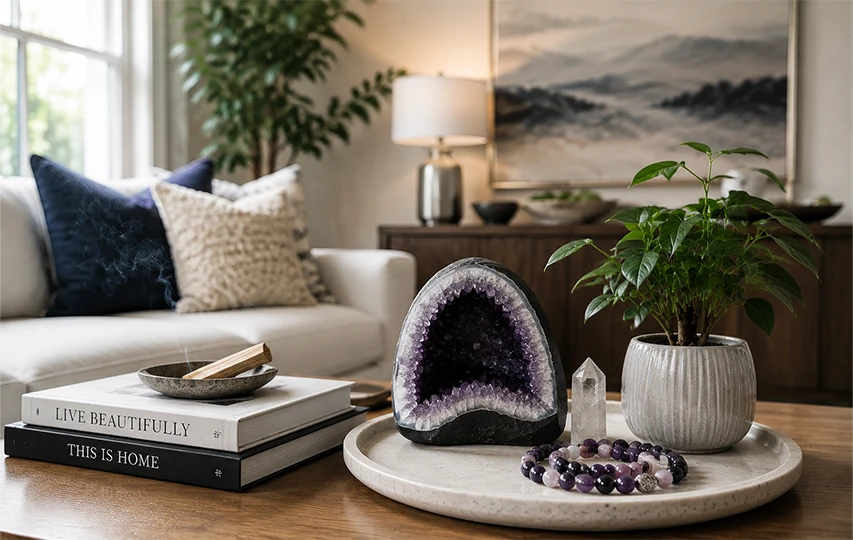
- Crystals
- Singing bowls
- Wealth frogs
- Jade plants
- Salt cures
Yet they continue living with overflowing closets, crowded countertops, and rooms filled with unused items.
From a Feng Shui perspective, clutter represents stagnant energy.
From a practical perspective, clutter creates stress, visual noise, and mental fatigue.
No remedy can compensate for a space where energy has no room to move.
Better Approach
Before adding anything new:
- Clear one countertop
- Organize one drawer
- Remove items you no longer use
- Create open pathways through the room
Many people notice an immediate improvement in how their home feels after decluttering alone.
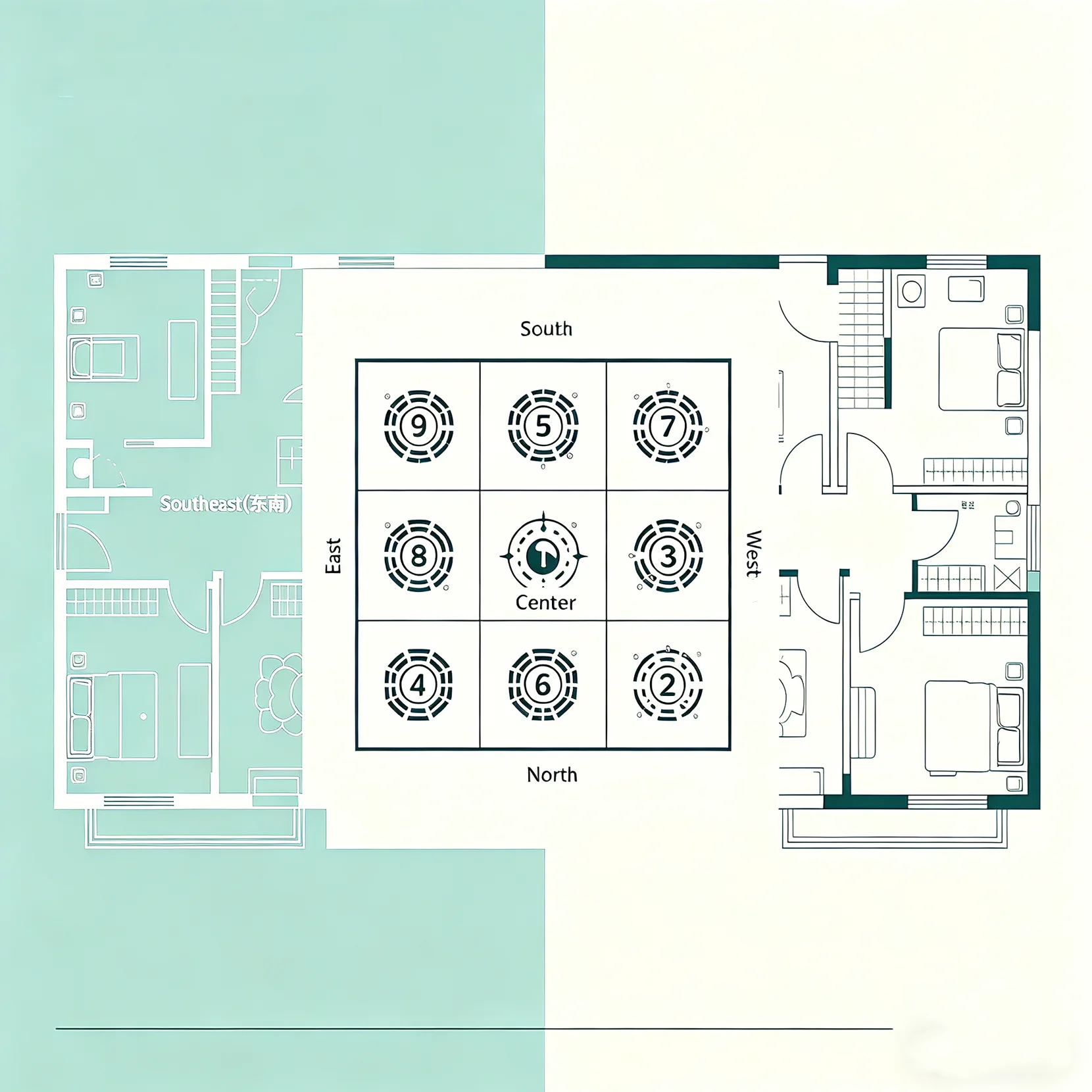
Mistake #3: Treating the Bagua Map as a Universal Template
The Bagua Map is one of the most popular Feng Shui tools—and one of the most misunderstood.
Many online guides suggest placing the Bagua over any floor plan and assigning areas such as:
- Wealth
- Career
- Relationships
- Health
However, traditional Feng Shui is much more nuanced.
A proper analysis often considers:
- Building orientation
- Construction period
- Environmental influences
- Occupant information
- Annual energy cycles
Applying a generic Bagua map without context can lead to inaccurate conclusions.
Better Approach
Instead of obsessing over finding your “wealth corner,” focus on how each room supports its intended purpose.
Ask:
- Does this room feel calm?
- Is the layout functional?
- Does the space support my goals?
The answers are often more important than the labels on a diagram.
Mistake #4: Using Too Much Water to Attract Wealth
Water is commonly associated with abundance and opportunity in Feng Shui.
As a result, many homeowners add:
- Indoor fountains
- Aquariums
- Waterfalls
- Multiple mirrors
Unfortunately, more is not always better.
Excessive water energy can create imbalance, especially when activated in unsuitable locations.
I’ve seen homes with multiple water features where the result wasn’t prosperity—it was restlessness, distraction, and difficulty sleeping.
Better Approach
Use water intentionally.
One properly placed water feature is typically more effective than several competing activations.
If you’re unsure about water placement, healthy plants can often provide a safer and more balanced alternative.
Mistake #5: Positioning the Bed Directly in Line With the Door
Your bed is one of the most important pieces of furniture in Feng Shui because it influences rest, recovery, and personal energy.
When the bed is directly aligned with the bedroom door, energy flows toward the sleeper without moderation.
Many people report feeling:
- Less secure
- More restless
- More easily disturbed during sleep
Better Approach
Place the bed where you can:
- See the door
- Avoid direct alignment with the doorway
- Rest against a solid wall
This arrangement is often called the “command position” and is widely considered one of the most supportive bedroom layouts.
Mistake #6: Using Every Feng Shui Element at the Same Time
After learning about the Five Elements, many people try to include all of them in every room.
Wood.
Fire.
Earth.
Metal.
Water.
The intention is balance.
The result is often visual chaos.
Effective Feng Shui is rarely about adding more.
It’s about adding what is missing.
Better Approach
Look at the room’s existing characteristics:
- Colors
- Materials
- Furniture
- Lighting
Then identify what feels absent.
A room filled with metal and glass may benefit from warmth and natural wood.
A heavy earth-toned room may benefit from lighter, brighter elements.
Balance is achieved through contrast, not excess.
Mistake #7: Ignoring What’s Happening Outside the Home
This may be the most important mistake of all.
Feng Shui does not stop at the front door.
The surrounding environment can significantly influence how energy interacts with a property.
Important factors include:
- Road direction
- Traffic flow
- Building angles
- Neighboring structures
- Trees and landscaping
- Land elevation
Traditional Feng Shui refers to some aggressive external features as “poison arrows,” but the practical idea is simple:
Harsh visual pressure and environmental stress can affect how a space feels and functions.
Better Approach
Take a walk across the street and observe your home objectively.
Ask yourself:
- What is pointing toward the house?
- Is there heavy traffic rushing toward the entrance?
- Are there sharp architectural angles aimed at windows?
- Does the property feel protected or exposed?
Often, understanding the problem is the first step toward solving it.
Does Feng Shui Really Work?
One of the most common questions homeowners ask is:
“Does Feng Shui actually work?”
The answer depends on how you define Feng Shui.
If you view it as a collection of lucky objects, you may be disappointed.
If you understand it as a system that evaluates environment, layout, movement, organization, and the relationship between people and space, its value becomes much easier to understand.
Good Feng Shui creates spaces that feel:
- Comfortable
- Supportive
- Organized
- Balanced
- Intentionally designed
Those qualities often influence how we think, feel, and perform in daily life.
Frequently Asked Questions
What is the biggest Feng Shui mistake?
The most common Feng Shui mistake is adding remedies before addressing clutter and energy flow. A cluttered environment can block both physical movement and energetic circulation.
Is it bad Feng Shui to have a mirror facing the front door?
In traditional Feng Shui, a mirror directly facing the front door may reflect incoming energy back outside rather than allowing it to circulate through the home.
Can Feng Shui improve wealth?
Feng Shui does not create wealth by itself. However, a well-designed environment can support focus, productivity, decision-making, and opportunity.
Where should a bed be placed in Feng Shui?
Ideally, the bed should be positioned so you can see the door without being directly aligned with it, while also having a solid wall behind the headboard.
What should I fix first in Feng Shui?
Start with clutter, organization, lighting, and furniture placement before investing in remedies or decorative Feng Shui objects.
Final Thoughts
The biggest misconception about Feng Shui is that it’s about buying the right object.
It isn’t.
Real Feng Shui is about understanding the relationship between:
- You
- Your home
- Your environment
- The flow of energy through both
The most effective changes are often the simplest:
Clear the clutter.
Improve the layout.
Support better rest.
Pay attention to your surroundings.
When those foundations are in place, everything else becomes far more effective.
Ready for a Personalized Feng Shui Analysis?
Every home has a unique energy pattern influenced by its orientation, layout, surrounding environment, and annual Flying Star Feng Shui cycles.
A personalized Feng Shui consultation can help identify opportunities and challenges that generic online advice simply cannot see.
Book Your Feng Shui Consultation Today and Discover What Your Home Is Really Telling You.
Discover Your Home’s Hidden Energy Pattern → Get Your House Feng Shui Report
Get to Know Your Five Elements for Free
Get to Know More about Feng Shui